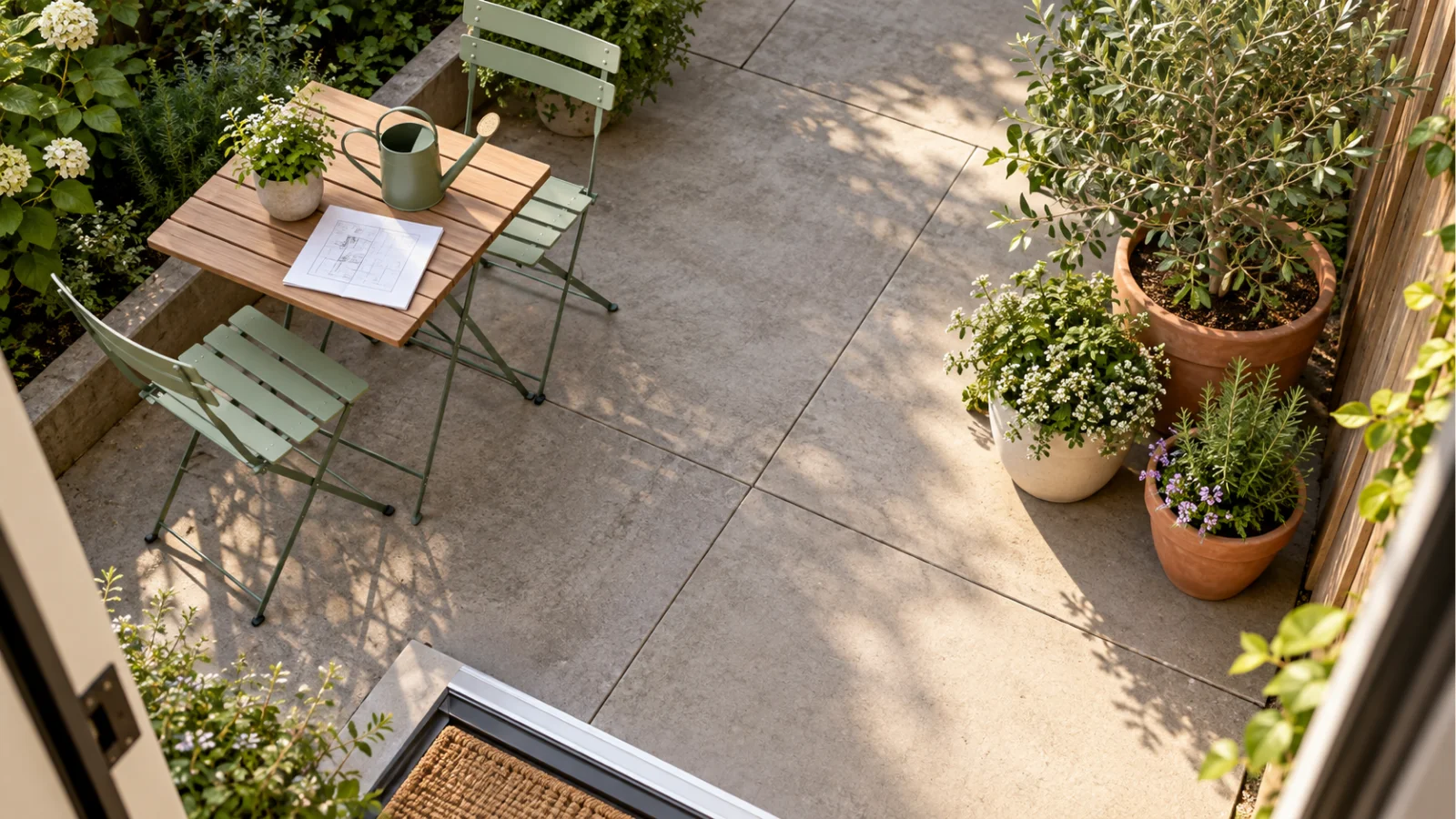
The most useful small patio garden ideas balance three things: the light plants receive, the space people need, and the maintenance you can manage. Map the sunlight, test your seating arrangement, and place containers where their mature growth will leave doors and walking routes clear.
Start with a few containers rather than filling every edge. A patio with two comfortable chairs and several well-placed plants can be easier to use than a larger collection of pots that crowds the table or makes watering awkward.
Choose plants after you understand the site. A sunny photograph is not enough to tell you what will grow on a shaded, windy, or heat-reflecting patio.
1. Map sunlight before selecting plants
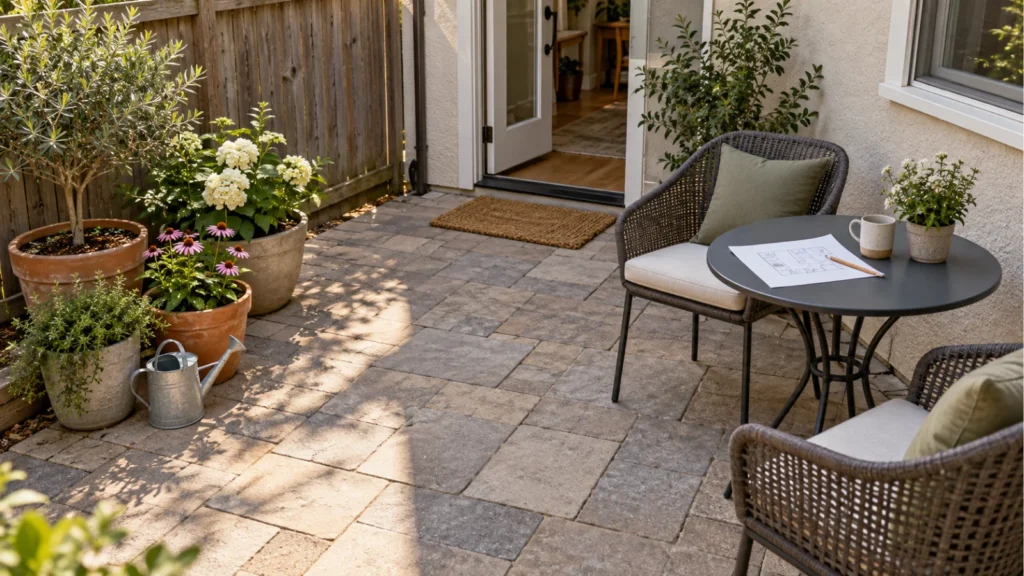
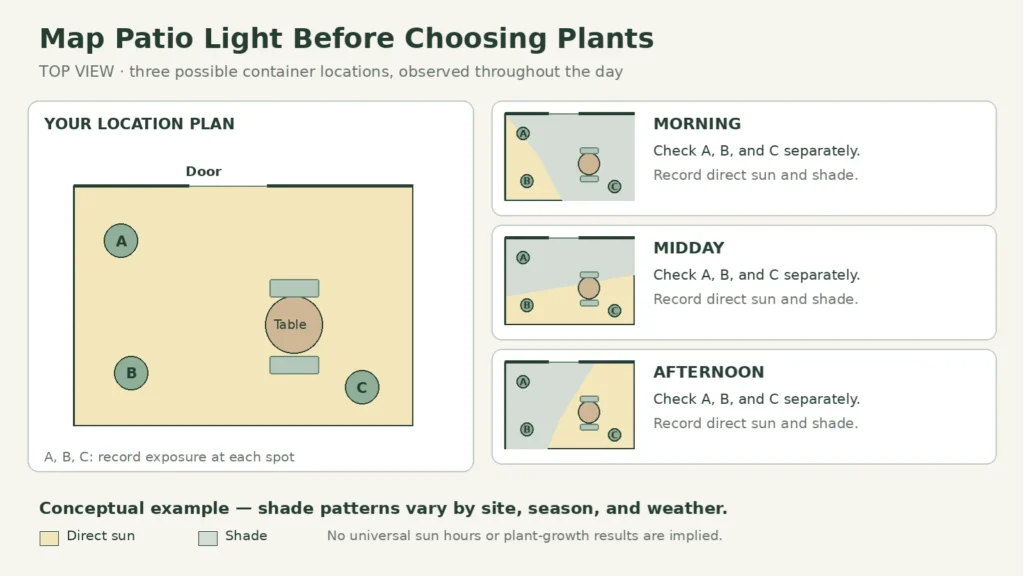
Observe the patio at several times during a representative day. Note when direct sun reaches each area and when the building, fence, trees, or furniture cast shade.
Repeat the check when seasonal conditions change. A patio measured in spring may receive different light after nearby trees leaf out.
| Location | Direct-sun periods | Other conditions | Plant requirement to check |
|---|---|---|---|
| Near the door | ___ | Overhang or wall shade | Light and mature spread |
| Outer edge | ___ | Wind or exposure | Stability and water needs |
| Beside a wall | ___ | Reflected heat | Heat tolerance |
| Seating corner | ___ | Shade from furniture | Light and access for care |
For edible examples, University of Maryland Extension recommends 6–8 hours of direct sun for warm-season crops such as tomatoes and peppers, and 3–5 hours for cool-season crops such as lettuce and spinach. These are crop examples, not requirements for every patio plant. University of Maryland Extension
Bright shade and direct sun are different conditions. Match the specific plant or cultivar to the observed light, your climate, and the planting season.
Also note hot paving and sunlit walls. Maryland Extension explains that hard surfaces can absorb or reflect heat and increase plant stress.
2. Place seating and movement first
Decide what you want to do on the patio: drink coffee, eat a meal, read, or tend vegetables. Choose furniture around that activity.
Mark the furniture footprint, then test it with people using it. A chair needs space to pull out, sit down, and stand up. A folding chair also needs a storage location when folded.
Keep the route from the door to the seating and garden accessible. Check door handles, steps, and the space needed to carry a watering can.
| Seating option | Useful when | Space to test |
|---|---|---|
| Two compact chairs and a small table | Conversation or coffee is the priority | Chairs occupied and moved back |
| One chair and a side table | The patio is mainly a personal retreat | Reach, standing up, and circulation |
| Bench | Several people may sit together | Legs, access, and any storage opening |
| Folding furniture | Uses change through the week | Both working and stored positions |
A bench against a wall may look compact, but seated legs still occupy the patio. Compare it with chairs before deciding.
Example: check one cross-section
For a simplified straight span:
Remaining width = patio width − planting projection − occupied seating projection
Assume an illustrative patio width of 96 inches (8 feet, or about 2.44 m). A planned container zone projects 16 inches, while the seating zone—including its tested occupied position—projects 40 inches.
96 in − 16 in − 40 in = 40 inches remaining
This is a geometry check, not a universal walkway recommendation or code assessment. It assumes the two zones occupy opposite sides of the same cross-section. Repeat the check at tighter points and account for door swings, table edges, and mature foliage.
MyProjectNest’s small entryway storage guide illustrates the same distinction between a furniture footprint and the space needed to use it.
3. Choose containers around the plants and the site
Measure the container’s widest outside dimension, including its rim, handles, saucer, or stand. The planting volume and usable root depth must also suit the plant.
| Container choice | Planning benefit | Tradeoff to check |
|---|---|---|
| Several small pots | Flexible placement | More individual watering checks |
| Fewer larger containers | Room for larger root systems | Greater filled weight and moving difficulty |
| Rectangular planter | Can follow a patio edge | Width, drainage, and plant spacing |
| Self-watering container | Reservoir may support moisture management | Overflow, filling access, and product instructions |
| Raised or vertical planter | Can bring plants within easier reach | Support, stability, shading, and watering |
Use containers intended for outdoor conditions. Verify weather suitability and care requirements rather than assuming an indoor decorative pot will perform outdoors.
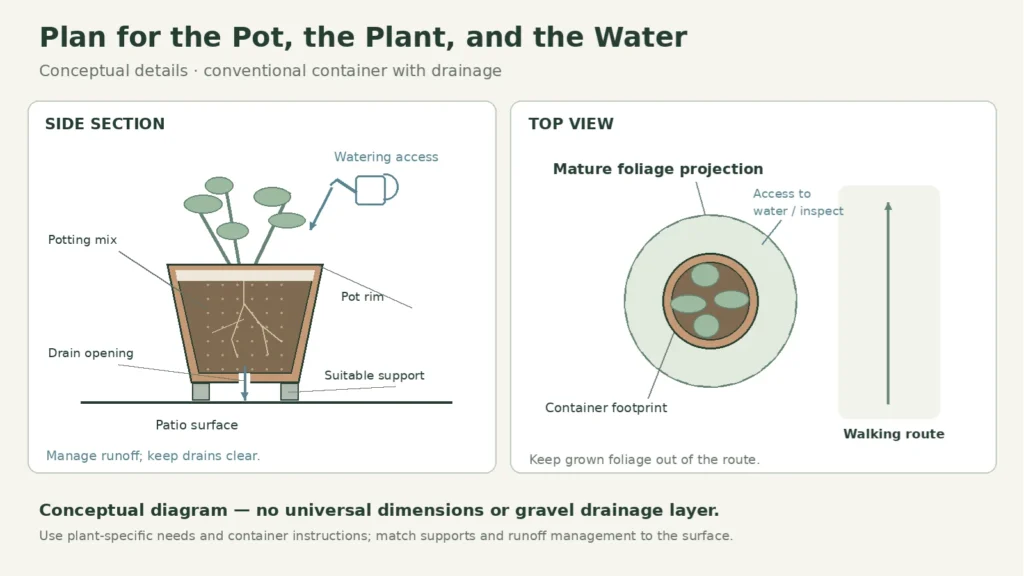
Drainage matters. University of Maryland Extension advises checking drainage holes and notes that self-watering designs manage excess water differently. Follow the specific container’s instructions. Adding gravel or broken pot pieces at the bottom does not improve drainage. University of Maryland Extension
Use growing medium suitable for containers and the selected plants. University of Minnesota Extension explains that potting mix is designed to retain moisture while allowing excess water to drain, unlike ordinary garden soil used in a pot. UMN Extension
4. Plan for mature plants, not just nursery pots
A plant that fits at purchase may spread into a chair, doorway, or neighboring container later.
Record mature height and spread from the plant label or reliable local growing guidance. Include any support needed for climbing plants or tall crops.
Place taller plants where they suit the view and light without shading plants that need more sun. Keep trailing growth away from walking routes and steps.
For mixed containers, group plants with compatible light, moisture, and growing-medium needs. RHS recommends combining plants with similar requirements rather than choosing companions solely for appearance. RHS Advice
Start with one useful grouping: perhaps containers for a sunny crop, suitable foliage in a shaded corner, or flowering plants beside the seating area. Choose varieties for your local conditions before finalizing the group.
5. Make watering and drainage part of the layout
Place containers where you can reach the growing medium, inspect the plant, and refill a reservoir if present.
Check the route to the water source. Avoid arranging pots so watering requires stepping over furniture or dragging a hose through the seating area.
Container watering needs change with plant size, weather, pot material, and growing medium. Minnesota Extension notes that hot, dry conditions can require frequent watering and advises following fertilizer labels to avoid over-application. Use observation and plant-specific guidance rather than a fixed schedule for every pot. UMN Extension
Plan where water will drain. Protect the patio finish using a suitable arrangement, and prevent water from flowing toward the doorway or onto another property. Empty collection trays as appropriate; do not leave plants standing in prolonged waterlogged conditions.
6. Prepare a focused shopping list
Buy from the measured layout rather than from a collection of inspiring photographs.
| Item | What to record |
|---|---|
| Containers | Outside dimensions, planting volume, drainage |
| Plants | Light, mature size, seasonal suitability |
| Potting mix | Suitable type and labeled bag volume |
| Supports | Plant requirements and installation method |
| Watering supplies | Access, storage, and compatibility |
| Furniture | Working footprint and outdoor suitability |
For potting mix, use the container’s planting volume where available. Account for the root ball and the container’s intended fill level; an outside-dimension calculation can overstate a tapered pot’s usable volume. Do not compare bag weight with required volume as though they were equivalent.
List delivery, accessories, and any professional work separately in your budget. No single pot count or spending amount suits every small patio.
7. Set up and review the patio in use
- Observe the light and record site conditions.
- Measure doors, furniture, and proposed container zones.
- Test the arrangement with empty pots or mockups.
- Confirm plant needs and container suitability.
- Position heavy containers before filling them.
- Plant and set up watering according to product and plant guidance.
- Recheck circulation as the plants grow.
Common mistakes include buying plants before checking sunlight, measuring chairs only while pushed in, overlooking full container weight, and letting foliage close a route that was clear at planting.
Begin with a manageable number of containers. Add more only when the layout and care routine support them.