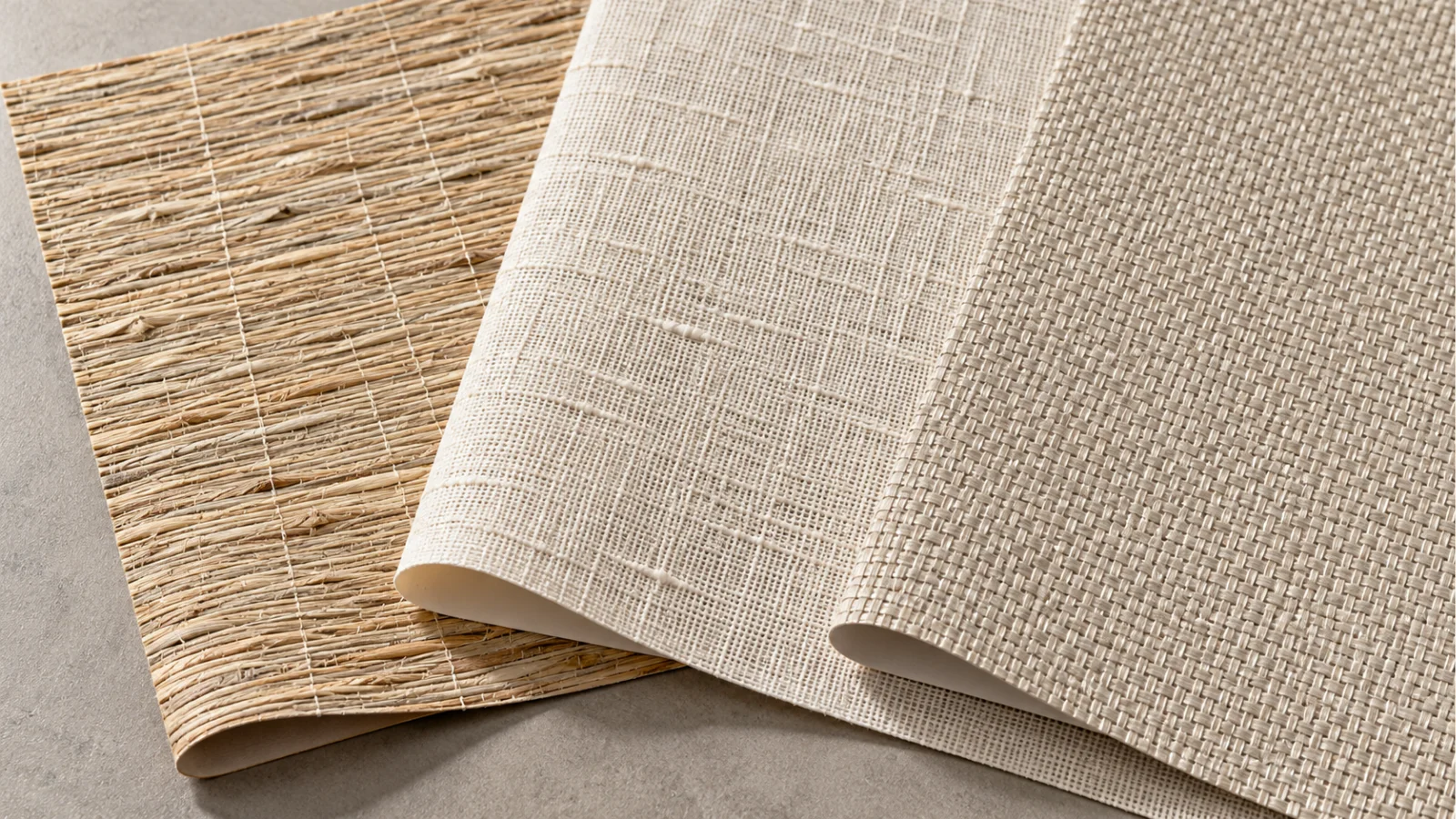
Choose natural grasscloth wallpaper when you want visible woven fibers and are comfortable with panel-to-panel variation and careful maintenance. Choose genuine linen wallcovering for a textile finish, or a linen-look or grasscloth-look product when its documented cleaning performance better suits the room.
The important distinction is construction. A wallpaper described as “linen” may be real textile, printed paper, or embossed vinyl. Likewise, faux grasscloth can resemble natural fibers while having very different care and installation requirements.
Before buying, compare the material, expected seams, cleaning instructions, and intended location—not just the color of a small swatch.
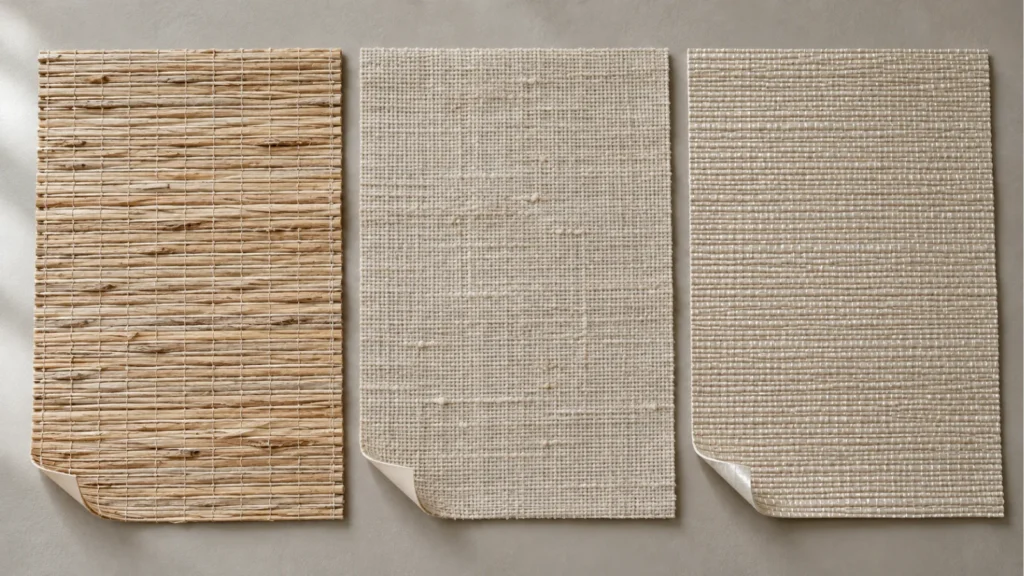
Understand what you are buying
Natural grasscloth: woven fibers with individual variation
Grasscloth is a category of wallcoverings made with natural materials such as jute, sisal, raffia, and sea grass. Fiber thickness, color, and weave can vary, giving the surface a less uniform appearance than a printed texture. Brewster describes these variations as inherent characteristics of natural grasscloth. Brewster Home
Some products use additional printing, metallic effects, or coatings. Read the actual construction rather than treating every item in a grasscloth collection as the same material.
Genuine linen: a textile wallcovering
Authentic linen wallcovering has a textile face rather than simply an image of woven fabric. Its appearance may range from a fine weave to more pronounced, irregular yarns.
Phillip Jeffries describes its linen textiles as laminated onto paper backing and emphasizes careful handling during installation. That is one manufacturer’s construction; check the backing and instructions for your selection. blog.phillipjeffries.com
Linen-look and faux grasscloth: appearance is not composition
A convincing woven effect can be printed or embossed onto another material.
For example, Brewster’s Bay Ridge Neutral Linen Texture is a fabric-backed vinyl with a linen print and slight embossing, listed as scrubbable. Its name describes the appearance; it is not a linen textile face. by Warner
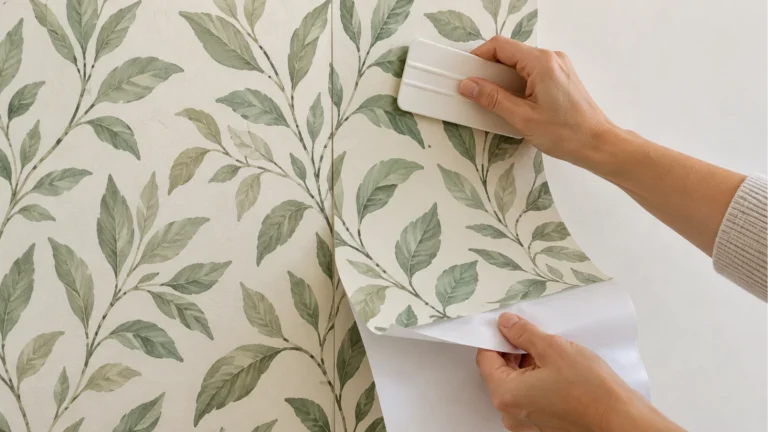
Faux products also vary. Do not assume that every imitation is vinyl, washable, or peel-and-stick.
| Construction | What to inspect in the sample | What to confirm before buying |
|---|---|---|
| Natural grasscloth | Fiber variation, weave, changes in tone | Paneling, moisture restrictions, cleaning method |
| Genuine linen textile | Yarn texture, weave direction, surface finish | Backing, seam expectations, approved care |
| Printed woven-look paper or non-woven | Printed detail and any embossing | Washability, repeat, installation system |
| Woven-look vinyl | Embossed texture, sheen, printed pattern | Product-specific cleaning and room approval |
Expect seams and paneling to be part of the decision
Grasscloth is not usually a seamless-looking finish
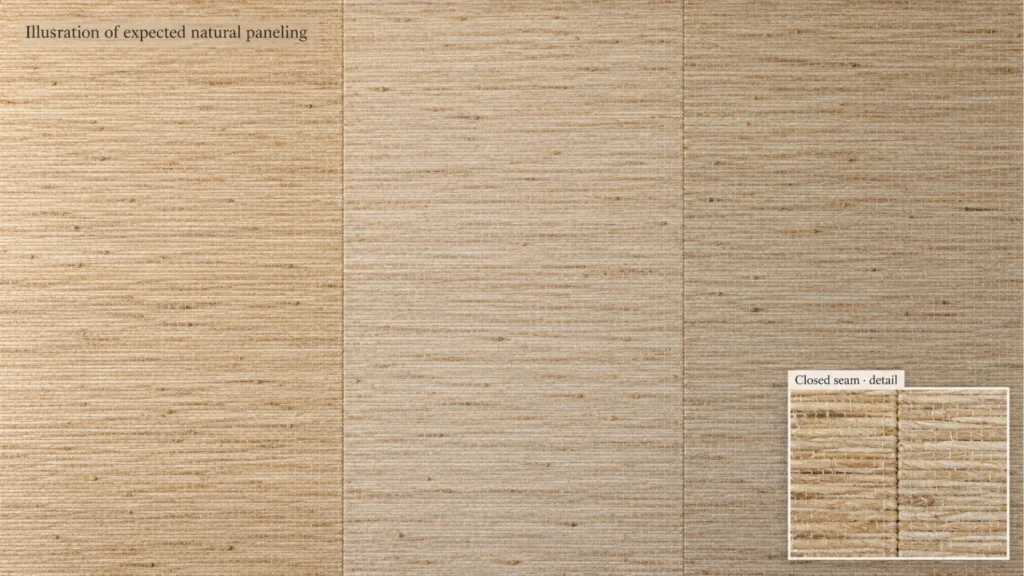
With many natural grasscloths, adjacent strips form visible panels. The fiber pattern and shade may change at the joint even when the installer has made a neat seam.
Phillip Jeffries identifies shading, or paneling, as an inherent characteristic of its natural wallcoverings. Its guidance recommends assessing material before pasting and planning panel proportions to balance the overall appearance. blog.phillipjeffries.com
A visible change in tone is different from an open gap, damaged edge, or incorrect product. Ask the installer to explain what is expected and stop for clarification if the delivered material appears questionable.
If an uninterrupted, uniform wall is your priority, inspect alternatives before committing to natural grasscloth.
Linen can show joints too
A finer textile texture does not guarantee invisible seams. Weave, light, color, trimming, and the specific seaming method influence the result.
Product documentation can help set expectations. Phillip Jeffries lists Kantha 2584 on Canvas Linen with subtle seaming, while other materials may have a different classification. Treat that description as specific to the product, not a promise for all linen wallpaper. Phillip Jeffries
Match maintenance to the material
Read the care sheet before planning a cleaning routine
“Textured,” “natural,” and “linen-look” are not cleaning instructions. Use the care guidance for the exact wallcovering, including any coating or printed finish.
Thibaut distinguishes gently dusted natural weaves from performance vinyls that can be wiped with mild soap and water. It also directs buyers to the product’s hanging and care document. thibautdesign.com
For a natural grasscloth, begin with the approved dry-maintenance method. Do not introduce water, cleaners, or a vacuum attachment unless the instructions permit them.
For a linen textile, confirm the allowed method separately. Some product specifications permit gentle wiping; that does not mean all textile wallpaper can be wet-cleaned.
Avoid universal stain-removal advice
Manufacturer guidance is not identical. Brewster’s older grasscloth guide advises dry cleaning only, while its wallpaper-properties page discusses careful damp treatment for grasscloth stains. That difference makes the current product instructions especially important. Brewster Home
If the instructions do not identify an approved stain treatment, contact the supplier before experimenting. Scrubbing or rubbing can change the finish even when it removes part of a mark.
A scrubbable designation applies to the identified product and its cleaning directions. It does not make the installation waterproof or suitable for direct shower exposure.
Choose the wall as carefully as the material
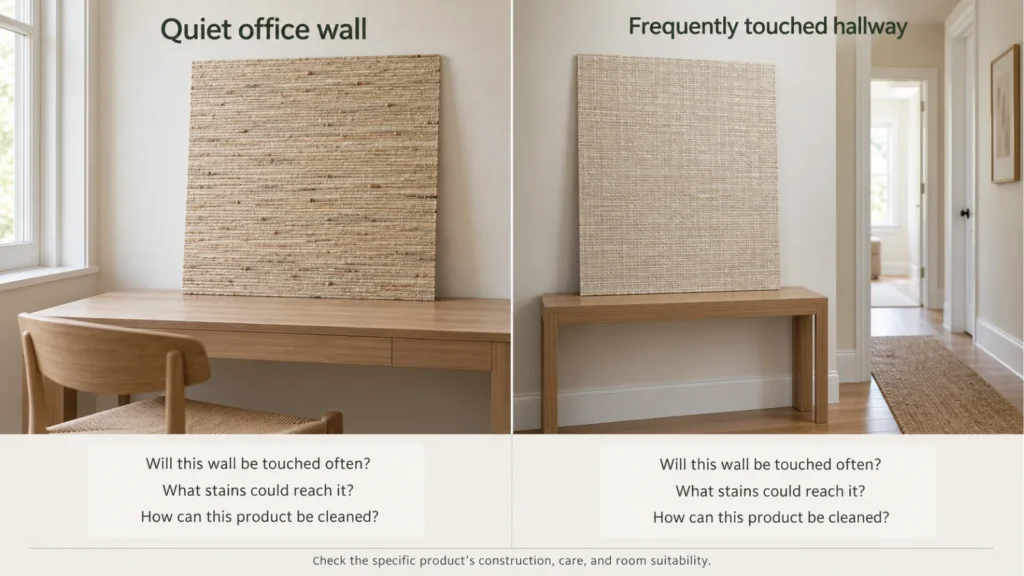
Dry, lower-contact locations are often easier to plan for natural woven finishes. Think about what reaches the wall during normal use.
| Location | Question to ask | Decision to consider |
|---|---|---|
| Bedroom feature wall | Will the headboard or pillows rub against it? | Keep furniture contact in mind when choosing the wall |
| Living room or home office | Is the wall mostly viewed rather than touched? | Compare natural weave and textile samples |
| Busy entry or narrow hallway | Will bags, coats, hands, or furniture hit it? | Prioritize documented durability and cleanability |
| Powder room | Is it near splashes or frequent touching? | Confirm product approval and location |
| Bathroom with shower or tub | How much steam and moisture reach the wall? | Consider an approved alternative |
| Cooking or sink area | Will food, grease, or water reach it? | Choose by cleaning requirements, not appearance alone |
Thibaut advises avoiding natural grasscloth in bathrooms where shower or tub humidity is not well controlled, and near toilets in half baths. This is location-specific guidance, not blanket approval for every other bathroom wall. Thibaut Wallpapers & Murals
For example, a dry office wall behind a desk presents a different maintenance problem from a breakfast nook where chair backs and food regularly contact the surface.
Compare samples in the actual room
Place samples near the intended wall without using an unapproved adhesive. View them in daylight, evening light, and light coming across the surface.
Use this short comparison record:
| Check | Notes to keep |
|---|---|
| Material | Actual face and backing, not just the design name |
| Texture | Fine or coarse; visual and tactile effect |
| Color | Appearance beside trim, furniture, and flooring |
| Sheen | How it changes when viewed from the doorway |
| Seams | Installed photographs and stated paneling expectations |
| Care | Exact permitted cleaning method |
| Placement | Splashes, rubbing, pets, and frequent contact |
| Installation | Installer assessment and preparation requirements |
A small sample can underrepresent variation. Ask whether a larger sample or a cutting from reserved stock is available, and what it tells you about the eventual order.
Plan the order and installation before purchasing
Measure each wall’s width and height at several points. Mark doors, windows, corners, and obstructions on a sketch.
Record these product details before estimating quantities:
- Usable width after any required trimming.
- Roll, bolt, panel, or yard-based ordering unit.
- Length supplied and minimum order increments.
- Pattern repeat and match, if applicable.
- Batch information and expected variation.
- Installation allowance recommended for the actual layout.
Do not divide wall area by advertised coverage and assume the result is the final order. Full-height drops, trimming, repeats, and panel placement can change the quantity.
Natural and textile wallcoverings deserve an installer experienced with those materials. Thibaut recommends professional installation, and Phillip Jeffries’ linen guidance emphasizes avoiding paste on the face, oversaturation, and creasing. These handling details differ from hanging self-adhesive paper. thibautdesign.com
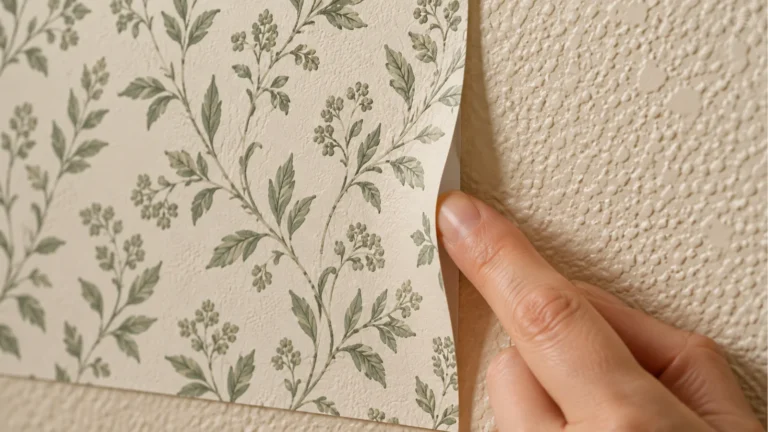
Confirm the adhesive, primer, preparation, and seam method from the supplied instructions. A textured wallpaper face is not a substitute for an appropriately prepared wall. If you are considering a self-adhesive imitation over texture, read the MyProjectNest textured-wall compatibility guide.