For rooms with frequent spills or wet shoes, an appropriately specified luxury vinyl plank floor is often a practical starting point. For bedrooms and living areas, laminate deserves consideration alongside LVP, particularly when its appearance, surface performance, and complete installed cost suit your needs.
Neither category wins every room. Some laminate products offer substantial protection against surface water, while waterproof vinyl still requires proper subfloor preparation and moisture control. Compare two specific products rather than relying on the category name alone. nalfa.com
The useful LVP vs laminate decision comes down to four questions: Where will the floor go? What water exposure will it face? What does installation require? And what will the whole project cost?
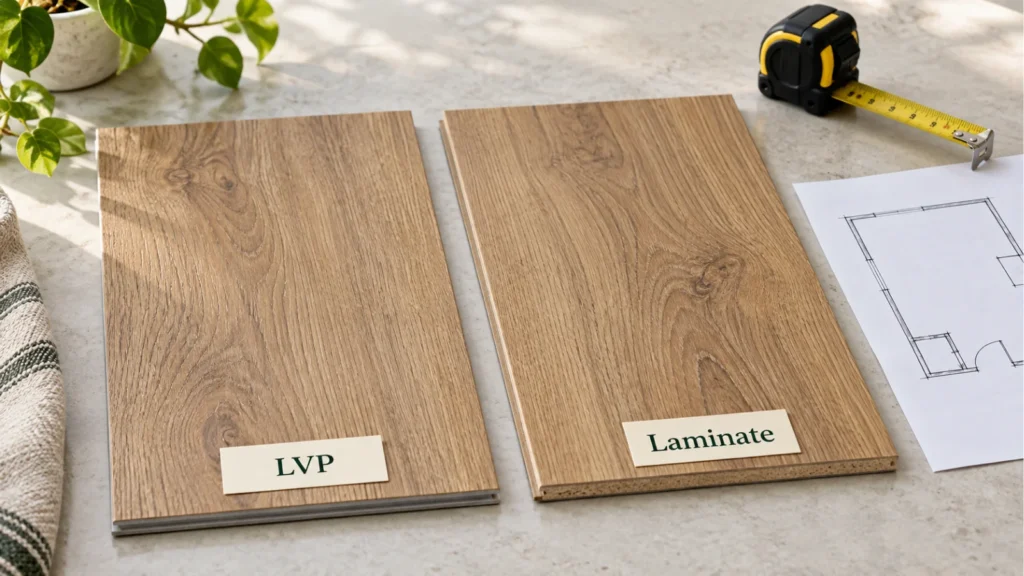
What is the difference between LVP and laminate?
LVP, short for luxury vinyl plank, is vinyl-based flooring in a plank format. Products include flexible constructions and rigid-core options, with different installation methods.
Laminate typically combines a protective surface, decorative image, wood-fiber core, and backing. Its wood-based construction distinguishes it from vinyl flooring. Mannington
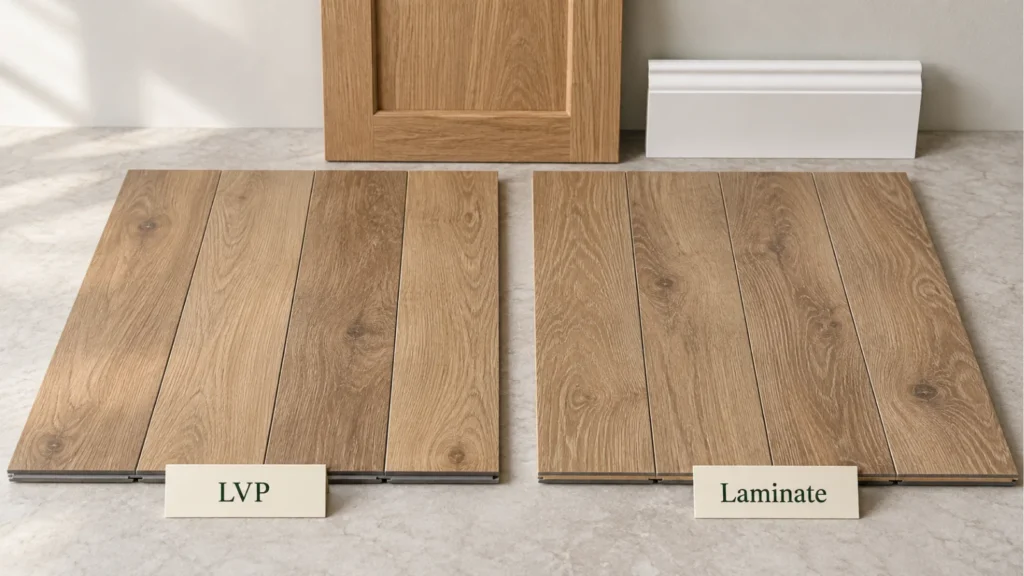
Both can imitate wood, so a photograph may tell you little about their performance.
| Decision point | LVP | Laminate |
|---|---|---|
| Construction | Vinyl-based; flexible and rigid-core products vary | Typically a layered product with a wood-fiber core |
| Water exposure | Many products are sold as waterproof; check installation and warranty limits | Protection ranges by product, including water-resistant and waterproof systems |
| Installation | Floating, glue-down, or other approved methods | Commonly a floating locking system |
| Cleaning | Follow the selected product’s cleaner and equipment guidance | Follow its moisture and cleaning restrictions |
| Cost comparison | Include preparation, accessories, and labor | Include preparation, accessories, and labor |
These are category-level distinctions. The product documentation determines what is appropriate for your project. Shaw provides separate vinyl installation guides, while NALFA emphasizes differences in laminate water performance. Shaw Floors
Compare water protection carefully
A spilled drink, water vapor from concrete, and a plumbing leak are different problems.
Before choosing flooring, separate:
- Surface exposure: spills, splashes, and wet footwear.
- Subfloor moisture: moisture within or moving through the base.
- Leaks or flooding: events that may affect flooring, walls, and the building structure.
Waterproof planks do not solve a damp subfloor
Shaw’s published SPC installation guidance warns that excessive subfloor moisture can create problems beneath waterproof flooring. It requires an appropriate base and moisture assessment. SPC Installation
If a basement has recurring dampness or a bathroom has an active leak, address the cause before covering the floor. Consult a qualified professional for moisture mitigation, structural damage, or waterproofing work.
Some laminate systems offer stronger water protection
Do not assume all laminate has the same spill tolerance. NALFA describes surface-water performance as a combination of the surface, joints, edge treatment, and core technology, with protection varying by product. nalfa.com
Pergo, for example, markets certain WetProtect laminate products with specific waterproof protection. Its Portfolio installation instructions also require prescribed perimeter sealing. Those requirements belong to that system and should not be transferred to another floor. Pergo Flooring
Ask what the warranty covers, what it excludes, and which installation details make the protection valid.
Choose according to the room
Use the following table to guide your shortlist. It is a planning framework, not a substitute for product approval.
| Room | Practical starting point | Main check |
|---|---|---|
| Bedroom | Compare both materials | Appearance, sound, comfort, and total cost |
| Living room | Compare both materials | Traffic, furniture, surface performance, and layout |
| Kitchen | Compare suitable LVP with laminate explicitly approved for the conditions | Spills, appliance clearances, perimeter details, and cabinet restrictions |
| Entry or mudroom | Prioritize documented moisture and wear performance | Wet footwear, grit, mats, and cleaning |
| Bathroom | Shortlist products expressly approved for bathroom use | Water exposure, edge details, and exclusions |
| Basement | Assess the slab before choosing either | Moisture testing, approved installation grade, and remediation |
Shaw advises choosing vinyl products specifically suited to water-prone rooms and following their installation instructions. Shaw Floors
For a dry upstairs bedroom, the decision may favor the sample you prefer and the better complete quote. For a busy entrance, water and grit may deserve greater weight.
Bathroom approval does not establish suitability for a shower floor or wet-room assembly. Obtain explicit system guidance for those applications.
Compare maintenance and everyday wear
Both materials benefit from removing grit, promptly cleaning spills, and protecting furniture contact points.
Shaw’s resilient-floor care guidance recommends regular dirt removal and an approved cleaner, while NALFA advises approved cleaning solutions and protection from heavy impacts for laminate. Costco
Check cleaning equipment before buying
Do not assume waterproof flooring permits every cleaning method. Shaw’s cited vinyl care guidance prohibits steam, while some Pergo WetProtect products advertise steam-mop compatibility. Permission is product-specific. Costco
If you intend to keep a particular steam mop or powered floor cleaner, verify that exact method with the flooring manufacturer.
Compare performance information, not just thickness
LVP specifications may list a wear-layer thickness in mils, while overall plank thickness is commonly listed in millimeters. These describe different measurements; mil does not mean millimeter.
Laminate may provide performance classifications or certification information. NALFA’s certification program assesses multiple characteristics, including wear, impact, moisture, and staining. Costco
Neither a thicker plank nor a longer warranty automatically proves superior scratch resistance. Compare intended use, relevant test information, warranty terms, and care requirements together.
For a home office, specifically ask about rolling-chair protection. For pets, include accidents and tracked-in grit in your comparison.
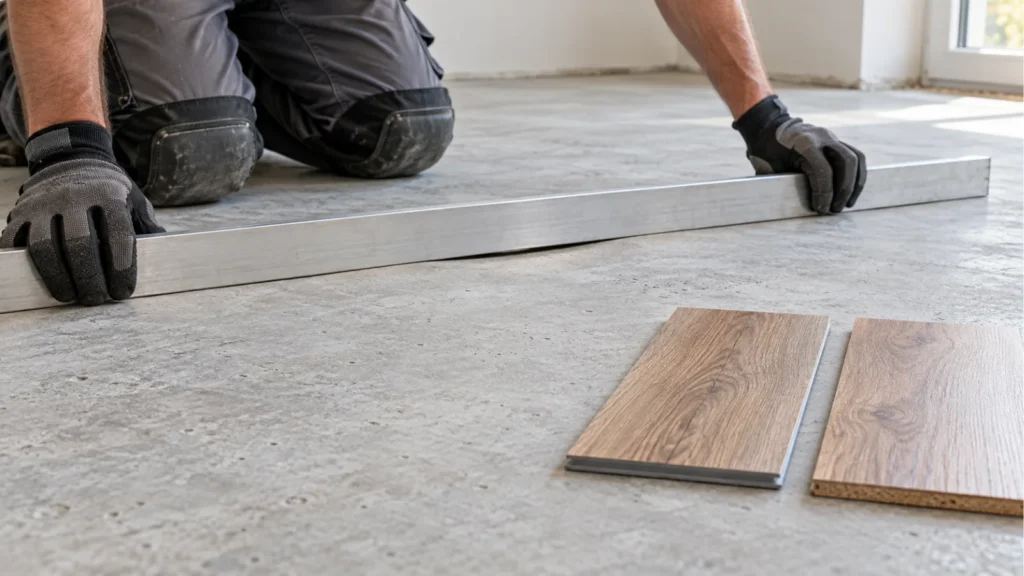
Installation starts below the finished surface
A click-lock floor can simplify plank assembly, but it does not eliminate preparation.
Before deciding between LVP and laminate, record:
- Existing flooring and subfloor type.
- Flatness and visible damage.
- Required moisture testing.
- Door and appliance clearances.
- Height differences at adjoining floors.
- Fixed cabinets and islands.
- Required transitions and expansion spaces.
Shaw identifies subfloor preparation as essential and directs installers to the guide for the selected vinyl construction. Shaw Floors
Floating and glue-down installations differ
A floating installation joins the flooring without bonding the entire surface to the base. A glue-down installation uses the specified adhesive system.
Confirm which method your product permits. Follow its requirements for expansion, underlayment, adhesive, room conditions, and preparation. Avoid assuming every LVP can be cut or installed with the same tools.
Attached padding does not settle every requirement
Some products include an attached pad. That does not answer whether you need a vapor-control layer or whether extra cushioning is permitted.
Check those questions separately. Shaw’s installation overview notes that underlayment needs vary. Shaw Floors
Do not use extra padding to compensate for a base that fails flatness requirements.
If preparation involves unidentified old flooring or adhesive, arrange appropriate assessment before disturbing it. Shaw’s SPC guidance specifically warns that older resilient materials and adhesives may contain asbestos.
Compare complete costs, not shelf prices
Neither LVP nor laminate is automatically the cheaper project. Request quotes for the same rooms and scope.
Total project cost = flooring + preparation + accessories + installation + removal and disposal + other quoted charges
Keep USD and CAD quotes separate. Record the location, quote date, taxes, and included work.
| Cost item | What to confirm |
|---|---|
| Flooring | Whole-box quantity and coverage per box |
| Removal and disposal | Existing material and disposal scope |
| Preparation | Repairs, flattening, testing, and any moisture mitigation |
| Installation accessories | Approved pad, vapor-control materials, or adhesive |
| Finishing details | Transitions, moldings, and required sealing |
| Labor and logistics | Furniture, appliances, delivery, and installation |
| Taxes and exclusions | What the quote includes and omits |
Shaw recommends requesting detailed estimates that identify removal and subfloor preparation. Shaw Floors
A lower plank price may not produce a lower total if that option requires different preparation or accessories.
Turn room area into whole boxes
Suppose a rectangular room measures 12 × 15 feet:
Area = length × width
12 ft × 15 ft = 180 sq ft, approximately 16.7 m².
Assume your documented cutting plan adds 18 sq ft, giving 198 sq ft to purchase. This allowance is an example for that plan, not a universal percentage.
For a hypothetical product covering 22 sq ft per box:
Boxes = round up(planned purchase area ÷ box coverage)
198 sq ft ÷ 22 sq ft/box = 9 boxes
The calculation assumes no additional alcoves or closets. Calculate each shortlisted product separately: its package coverage and approved layout may differ.
Flooring material cost = whole boxes × current quoted price per box
Use an actual quote in that formula rather than an assumed market price.
Inspect samples before making the final choice
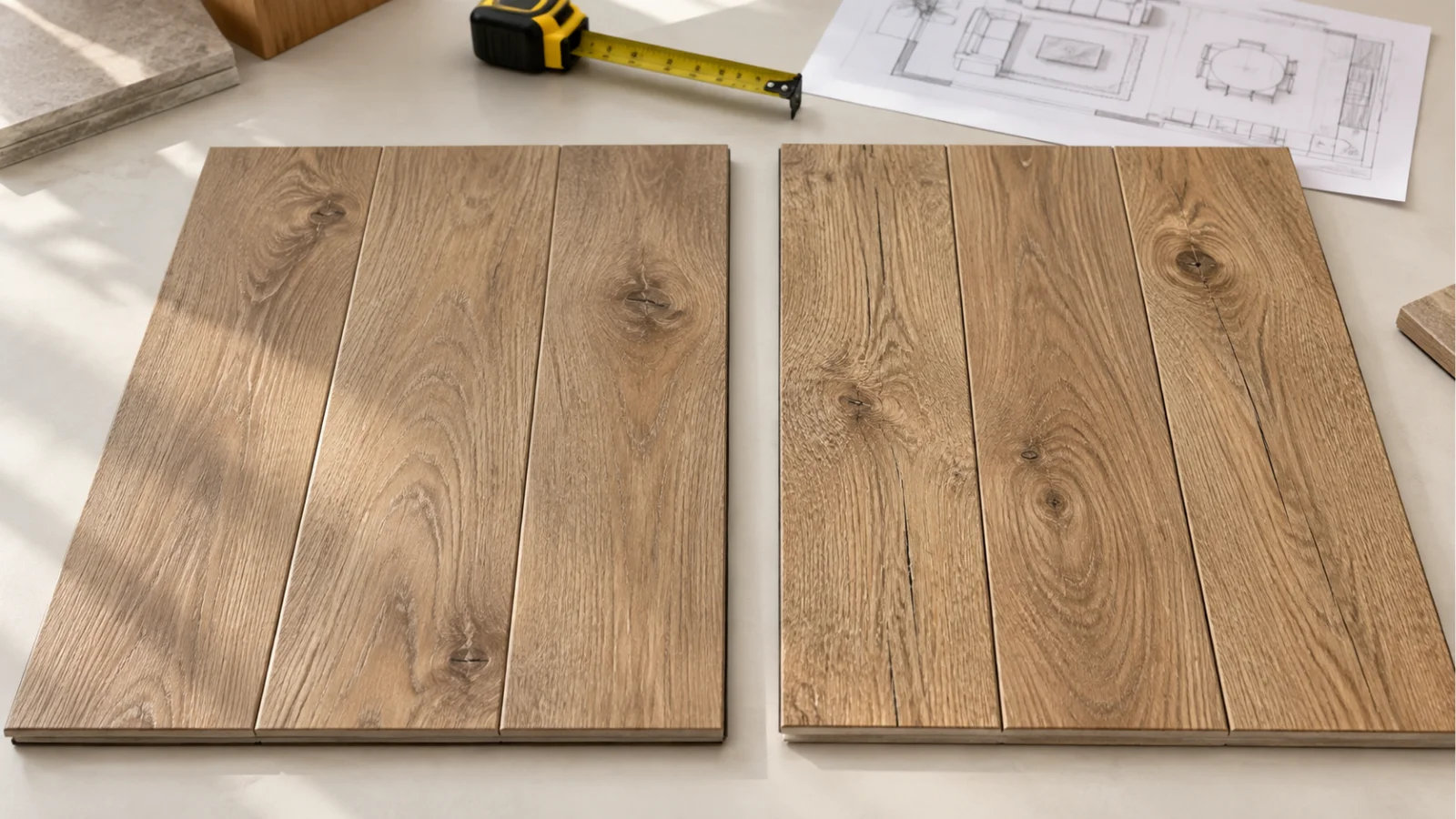
Compare several planks when available. Look at texture, sheen, printed variation, and how the color works beside cabinets and walls.
View the samples in daylight and normal evening lighting. Inspect the edges and locking profile, but use the technical documents to judge performance.